
Gua Sha in the Age of Technology: Old Ritual, New Devices

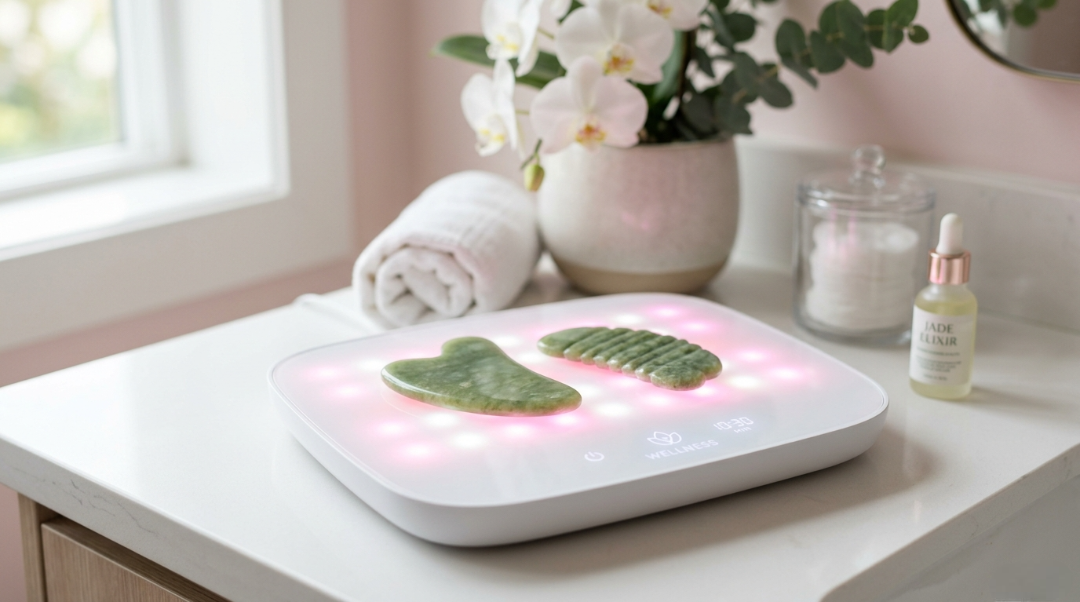
Gua sha is not new. Traditional Chinese and South Asian healers used it for centuries — a smooth stone tool scraped firmly across skin to move blood, reduce tension, and clear what they called stagnant energy. Grandmothers in rural Punjab did something close to it without the fancy name.
What is new is the price tag. And the packaging. And the Instagram.
In the last few years, beauty tech brands have released electric gua sha devices — heated, vibrating, microcurrent-emitting tools that claim to do in five minutes what traditional practitioners spent decades learning. Some cost more than a month’s grocery budget. So the obvious question is: do they actually work differently?
What the Traditional Tool Actually Does
A jade or rose quartz gua sha stone works through physical pressure and friction. When you scrape it across your jawline or cheekbones with the right angle and pressure, you’re doing two things: stimulating lymphatic drainage (which reduces puffiness) and increasing local blood circulation (which gives a temporary “glow” effect). Done consistently, it can soften facial tension — especially around the jaw and temples, where most people hold stress without realising it.
The tool itself doesn’t do the work. The technique does. This distinction matters when evaluating what the new devices are actually replacing.
What the New Devices Add
Modern electric gua sha tools typically combine two or three features:
Microcurrent technology sends a low-level electrical pulse through skin tissue. There’s genuine clinical research behind this for facial muscle toning — it’s the same principle used in physiotherapy. Some dermatologists use professional-grade microcurrent devices in clinics, and the home versions are weaker versions of those.
Vibration or sonic waves help product absorption and can aid lymphatic movement, similar to what manual pressure achieves but with less skill required. Good for people who struggle to maintain consistent pressure and angle with a stone.
Heat is the most practical addition. Warm tools relax facial muscles before treatment and help serums and oils penetrate more effectively. This is actually harder to replicate manually — you’d need to warm a stone in water first, which most people don’t bother doing.
What They Don’t Add
Neither a ₨500 stone nor a ₨8,000 electric device will restructure your bone or dissolve fat deposits. The sculpting results you see in viral videos are real — but they’re temporary. Lymphatic drainage reduces morning puffiness for a few hours. It doesn’t permanently slim your face.
The skill gap is also real. A stone in practiced hands outperforms a mediocre electric device. Scraping too hard or at the wrong angle causes bruising, broken capillaries, or irritation — regardless of whether the tool vibrates.
Which Should You Use?
If you’re starting out: a traditional stone is enough. Learn the technique first. There are good tutorials available and the learning curve is roughly two to three weeks of daily use before it feels natural.
If you have a consistent practice and want to add something: a heated vibrating tool is a genuine upgrade for product absorption and convenience, not a replacement for what the stone does.
If you’re buying an expensive device because you haven’t seen results from a stone: the issue is technique, not technology.
The Pakistani Climate Factor
Karachi and Lahore summers mean high humidity and heat. Facial puffiness from heat and poor sleep is common. A gua sha routine — stone or electric — genuinely helps here more than in cooler climates because the lymphatic drainage effect is more pronounced when fluid retention is higher.
Pair your tool with a light facial oil or serum before use. Never scrape dry skin.