
Do LED Face Masks Actually Work? A Dermatologist’s Verdict

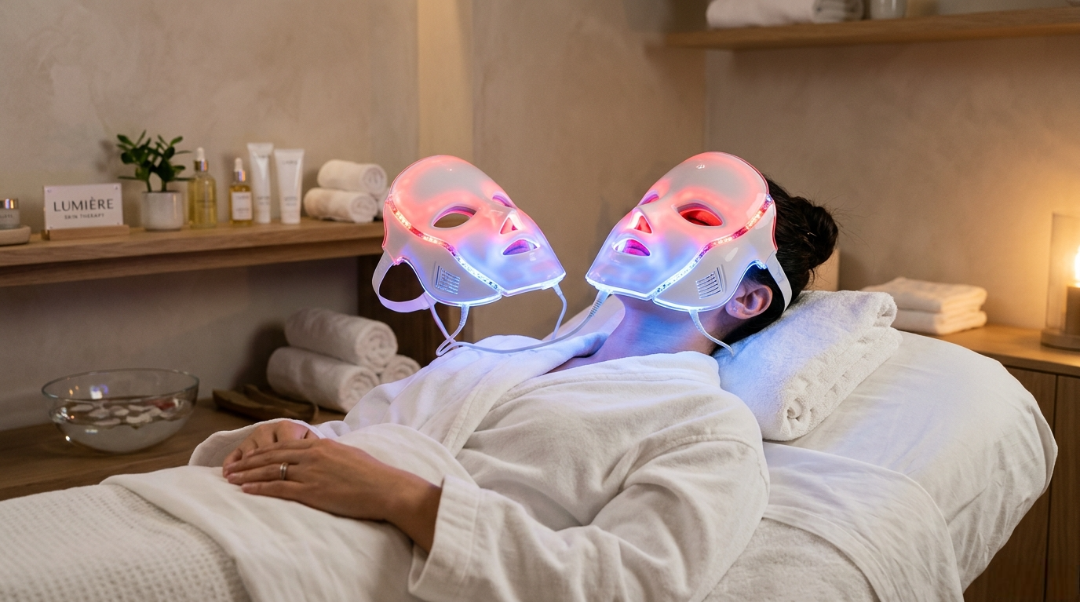
LED face masks have gone from clinical equipment to Instagram accessory in about five years. They look dramatic, the before-and-after photos are compelling, and the price range runs from ₨3,000 to ₨80,000 depending on how many lights are involved.
The honest answer to whether they work is: some of them, for specific things, with consistent use, and not as dramatically as the marketing suggests.
Here’s the actual breakdown.
What LED Light Does to Skin
LED (light-emitting diode) therapy uses specific wavelengths of light to penetrate skin at different depths. This is the core claim — and unlike a lot of beauty technology, it has real clinical backing.
The relevant wavelengths are:
Red light (620-700nm) penetrates into the dermis and stimulates fibroblast activity — the cells responsible for collagen and elastin production. Clinical studies, including trials in dermatology journals, show measurable improvements in skin texture and fine lines with consistent professional-grade treatment. The effect is real but gradual.
Blue light (415-450nm) targets Propionibacterium acnes — the bacteria primarily responsible for inflammatory acne. Blue light kills it at the surface level. This is why blue light is used in dermatology clinics for acne management, particularly for patients who can’t tolerate topical treatments.
Near-infrared light goes deeper than red, into subcutaneous tissue. Used for inflammation reduction and wound healing. Less relevant for cosmetic concerns but present in many devices.
Clinical Devices vs Consumer Devices
Here’s the gap most marketing materials skip: the LED masks used in dermatology clinics deliver significantly higher irradiance (power output per unit area) than home devices. Regulatory requirements in most markets cap consumer device power output for safety, which means home devices work — but work more slowly and require more sessions to approach clinical results.
A clinical red light treatment might achieve in one session what a home device achieves in eight to twelve sessions. This isn’t a reason not to use home devices; it means you need consistent, long-term use rather than expecting visible results in two weeks.
What They’re Actually Good For
Mild to moderate acne: Blue light masks have solid evidence for reducing inflammatory lesion count. They work better on active acne than on scarring or PIH. They don’t replace a topical treatment routine but can meaningfully complement one.
General skin quality / anti-ageing: Red light with consistent use (3-5 times per week, 10 minutes per session, over 8-12 weeks) does improve skin texture and tone in most people. The results are subtle rather than dramatic — more of a consistent glow and slight firmness improvement than a visible restructuring.
Wound healing and redness reduction: Near-infrared is genuinely useful here, especially post-procedure. If you’ve had extractions, laser, or chemical peels, LED therapy accelerates recovery.
What They’re Not Good For
Deep wrinkles, sagging skin, or significant structural changes require procedures that go beyond what light can do. LED masks are maintenance and prevention tools, not correction tools.
PIH and hyperpigmentation on South Asian skin: LED masks don’t treat pigmentation effectively. Incorrect use of certain wavelengths can actually trigger more melanin production. This is worth knowing before assuming a mask will fix dark spots.
The Cheap Mask Problem
The ₨2,000-4,000 LED masks widely available on Pakistani e-commerce platforms are largely unverified in terms of actual wavelength output and irradiance. A mask that emits technically red-coloured light is not the same as one calibrated to the therapeutic 630-660nm range at sufficient power.
If you’re buying, look for devices from brands that publish their irradiance specifications (mW/cm²) and wavelength accuracy data. No specs published = no way to verify the claim.
Verdict
LED masks work. Not miraculously, not immediately, and not if you buy the cheapest option available. For acne management (blue light) and gradual skin quality improvement (red light), they’re a legitimate addition to a skincare routine — if you use them consistently over months, not days.
For a new buyer: start with a mid-range device from a brand that publishes specs. Use it three to five times a week for at least eight weeks before evaluating results. Pair it with a solid basic skincare routine — cleanse, treat, SPF. The mask amplifies a good routine. It doesn’t replace one.